

The Confluence will focus on the intersection of research and professional learning, exploring what becomes possible when these efforts meet with intention and purpose.
Dates and TIMES
Tuesday, October 20 – 11:00 AM-5:00 PM EST
(Network Reception 5:00-6:30 PM EST)
Wednesday, October 21 – 9:00 AM-3:30 PM EST
location
The Franklin Institute
222 North 20th Street, Philadelphia, PA 19103
Important Convening Information
| Time | Location | Event |
|---|---|---|
| 9:45 AM – 11:00 AM | LGCC Prefunction Foyer / General Sessions Room | Registration and Breakfast |
| 11:00 AM- 11:25 AM | General Sessions Room | Welcome | RPPL Annual Convening 2026 |
| 11:25 AM- 12:25 PM | General Sessions Room | Plenary | Turning Collaborative Research into Collective Learning |
| 12:30 PM- 1:30 PM | General Sessions Room | Lunch |
| 1:35 PM- 2:35 PM | Breakout rooms and classrooms | RPPL-Led Presentations | Designing at the Intersection |
| 2:35 PM- 2:50 PM | LGCC Prefunction Foyer / General Sessions Room | Transition + Snack Break |
| 2:55 PM- 4:15 PM | Breakout rooms and classrooms | Network-Led Workshops | Working at the Intersection |
| 4:15 PM- 4:30 PM | LGCC Prefunction Foyer / General Sessions Room | Transition |
| 4:30 PM- 5:00 PM | General Sessions Room | Closing | Day 2 Preview |
| 5:00 PM- 6:30 PM | General Sessions Room | Welcome Reception |
- [Classroom 6] Decoding Coaching Conversations: AI-Driven Insights for PL Providers OR Opening the Black Box of Coaching: AI, Evidence-Based Moves, and Scalable Impact
RPPL: Arielle Boguslav, Senior Research Associate, and Brendon Krall, Research Project Director
Discover how the Coaching Moves Framework and new AI-powered Coaching Moves classifier unlock the “black box” of coaching conversations by aligning everyday practice with learning science. This presentation will provide an overview of the Coaching Moves taxonomy, then share case studies of how the Coaching Moves classifier can identify patterns in coaching conversations to build our understanding of how coaching is enacted. Participants will leave with practical ways to evaluate and refine their coaching models at scale.
- [Classroom 5] Instructional Coherence in Practice: District and PL Provider Approaches
RPPL: Claire Allen-Platt, Research Scientist and Olga Pagán, Research Scientist
Many organizations and districts across the country are working to improve instructional coherence — to support schools and systems in getting clear and specific about instructional expectations for students and what teachers should learn and develop on the job to advance those expectations within and across grades and school sites. This interactive session draws on insights from two collaborative RPPL research projects at the intersection of professional learning and instructional coherence: one examining district PL strategies through the lens of the district leaders who designed them, and another convening organizations with direct experience building coherence at the school, district, and state levels. Participants will have the opportunity to weigh these findings against their own professional context through structured small-group discussion, and leave with ideas about concrete strategies applicable to their own work.
- [Breakout 2] Scores vs. Stories: Experimental Evidence on How Numeric Feedback Shapes Coaching Quality and Teacher Development
John Papay, Senior Researcher, RPPL, and Robin Greatrex, Senior Managing Director, Corps Member Leadership Development Learning & Insights, Teach For America
Do numeric observation scores boost teacher performance or damage coaching trust? This session shares insights from a 2025–26 randomized trial evaluating how different CLASS feedback formats influence coaching conversation quality and subsequent teacher score growth. Participants will learn about the report design and how score transparency affects both teacher-coach relationships and classroom practice.
- [Breakout 1] Enacting a State Policy Vision: Balancing Structure and Flexibility to Strengthen District PL Implementation
Andrea L. Ochoa, Senior Research Associate, RPPL; Nitika Tolani, Managing Director of Learning and Engagement, RPPL; Allison Pickens, Literacy Specialist, Massachusetts Department of Elementary & Secondary Education; and Colleen O’Brien, Literacy Specialist, Rhode Island Department of Education
Balancing centralized priorities with district autonomy is a critical challenge for State Education Agencies (SEAs) enacting system-wide policies. Drawing from ongoing partnership research in Massachusetts and Rhode Island, this moderated discussion showcases how SEA leaders designed structured yet flexible policies and how these design elements influence district professional learning implementation. Participants will explore how the MA and RI approaches are relevant to their local context, and leave with sharper questions about navigating structure and flexibility in their own state-district contexts.
- [Classroom 6] Implementing AI-Powered PL: When, Where, and Why Human Roles Matter
Julie Cohen, Charles S. Robb Professor, University of Virginia; Rebekah Berlin, CEO, TeachSim at Cambiar Education and Hallie Parten, Chief Product Officer, TeachSim at Cambiar Education
This workshop focuses on the emerging design and implementation of such AI-powered PL systems. These systems have the potential to expand access to high-quality PL in contexts without existing resources and strengthen and accelerate PL in contexts where it already exists. By the end of the workshop, participants will be able to: (1) Describe the core design features of one example of an AI-powered PL system for instructional skill development and map its affordances and limitations for improving teaching practice. (2) Identify teaching contexts well-positioned to adopt AI-powered PL systems and the implementation conditions that support their use. (3) Develop context-specific implementation strategies, including defining the role of human facilitators (e.g., coaches, leaders) to extend, interpret, and amplify the impact of the AI-powered PL systems.
- [Breakout 2] From Data to Coherence: Using 5 Essentials, MAP Growth, and Learning Walks to Strengthen Professional Learning
Grant Atkins, Education Research Director, HMH/NWEA and Brian Prybil, Deputy Superintendent, Moline-Coal Valley School District
This interactive workshop shares an emerging district-researcher case study from Moline Coal Valley School District, where leaders connected 5Essentials, MAP Growth, classroom-level “Mapping Success” routines, and non-evaluative learning walks to strengthen instructional coherence and adult learning. In this workshop, participants will engage in two applied activities. First, they will use a coherence-mapping protocol to examine how different forms of evidence can connect to PL routines, feedback loops, and improvement questions. Second, they will analyze a de-identified Mapping Success-style example to consider how growth data can be used for learning from practice rather than simply recognition or accountability.
- [Classroom 5] Holding Up a Mirror: How AI Supports Coaching Conversations and Teacher Reflection
Teaching Matters: Jennifer Gleason, Associate Director of Service Design; Emilie Rivkin, Senior Educational Consultant and Heidi Donohue, Associate Director of Programs
This session will (1) introduce participants to how Teaching Matters coaches use TeachFX to build a shared understanding of effective math instruction, and (2) explore how structured reflection protocols can scaffold teacher reflection. Participants will leave with a concrete model for using AI-enabled technology in coaching sessions, an understanding of how data sequencing can scaffold teacher reflection, and ideas for extending this work to professional development between coaching visits.
- [Breakout 1] Beyond Adoption: How Nebraska Used CBPL to Help Educators Leverage HQIM for Students with Disabilities
SPED Strategies: Lauren LeBental, Vice President and David Lowe, Managing Director
This session engages participants in an exploration of what made Nebraska’s “Materials Matter for All” CBPL so effective. Participants will develop the skills and conceptual understanding required to leverage HQIM for students with disabilities across tiered instruction. They will also connect key attributes of the series to RPPL’s 10 Qualities of CBPL, leaving with a framework they can apply in their own contexts.
| Time | Location | Event |
|---|---|---|
| 8:30 AM- 9:00 AM | LGCC Prefunction Foyer / General Sessions Room | Registration and Breakfast |
| 9:00 AM- 9:20 AM | General Sessions Room | From Shared Understanding to Action: Recap and Preview |
| 9:20 AM- 10:20 AM | General Sessions Room | Plenary | From the Classroom to the Confluence |
| 10:20 AM- 10:35 AM | LGCC Prefunction Foyer / General Sessions Room | Transition Time |
| 10:35AM- 12:10 PM | #1-9 General Sessions Room #10-12 Classroom 5 #13-16 Classroom 6 | Network-Led Table Talks | Ripples of Conversations Two session rounds; 45 minutes each, attendees can visit a different table for round two |
| 12:10 PM- 1:10 PM | General Sessions Room | Lunch |
| 1:15 PM- 2:15 PM | Breakout rooms and classrooms | Thought Leader Sessions | Tributary Conversations |
| 2:15 PM- 2:30 PM | LGCC Prefunction Foyer / General Sessions Room | Transition + Snack Break |
| 2:30 PM- 3:15 PM | General Sessions Room | Thought Leader Debrief | The Confluence |
| 3:15 PM- 3:30 PM | General Sessions Room | Closing and Gratitude |
- [General Sessions Room] Research at the Speed of AI: Rethinking Evidence for AI-Enabled Instructional Tools
Relay, Graduate School of Education: Dr. Alice Waldron, Vice President of Innovation
This table talk will bring together researchers, practitioners, and organizational leaders to discuss emerging challenges and opportunities in studying AI-enabled instructional tools. Drawing on Teaching Lab Studio’s experience publishing research on AI-enabled, HQIM-aligned tools like Coteach, facilitators will explore how AI-supported tools are being developed, evaluated, and implemented in practice. The discussion will surface questions about pedagogical quality, scalable evaluation, product readiness, rapid-cycle experimentation, implementation research, and longer-term efficacy studies across the stages of AI tool development and implementation.
- [General Sessions Room] Professional Learning Communities that Drive Student Impact
New Teacher Center: Lisa Schmitt, Senior Director of Impact and Krysten Wendell, Vice President of Program and Partnerships
In NTC’s interactive session, participants will engage with a PLC logic model designed to help district and professional learning leaders articulate, measure, and strengthen the impact of PLCs. NTC will share an emerging framework that identifies critical inputs, implementation conditions, and short, medium, and long-term outcomes believed to drive changes in instructional practice and student outcomes. Participants will explore how districts can move beyond participation metrics to more meaningful indicators of PLC effectiveness.
- [General Sessions Room] The Missing Link: Connecting Policy to Teacher PL Research & Practice
New America: Melissa Tooley, Director, Educator Quality, New America, Education & Work Program
The presenter will use live polling questions to gauge participants’ level of knowledge and comfort about policies that promote effective PL, while simultaneously building participants’ foundational knowledge about enabling and inhibiting policies for effective PL. In this session, participants will learn about specific ways that state and district policies can enable or inhibit strong professional learning implementation. Participants will also have the opportunity to practice accounting for policy conditions when designing PL programs and research to evaluate them.
- [General Sessions Room] Evolutionary System Improvement: Linking Learning to Application
Eastern Upper Peninsula Intermediate School District: Lindsay Brindley, Systems Improvement/Secondary ELA
This session introduces participants to the integration of the Professional Learning Landscape (PLL) and the Evolutionary Systems Improvement (ESI) framework as a coherent approach to sustainable school and district improvement. Rather than viewing professional learning as isolated workshops or disconnected initiatives, this session positions professional learning as the implementation infrastructure that drives instructional coherence, leadership alignment, continuous improvement, and equitable student outcomes.
- [General Sessions Room] Designing Online Professional Learning for Deeper Teacher Learning: Lessons from a Synchronous + Asynchronous Model
Student Achievement Partners: Claire Delcourt, Senior Research & Evaluation Analyst and Dr. Diana Cordova-Cobo, Director of Research & Evaluation
In this table talk, Student Achievement Partners (SAP) builds on existing research by sharing insights from designing and implementing a flexible, online PL course for K-12 educators on leveraging multilingual learners’ language knowledge during mathematics instruction. Participants will have the opportunity to learn about online PL best practices and SAP’s findings from conducting a series of synchronous online PL sessions that also include asynchronous engagement and practice. They will also reflect on practical approaches for studying whether online PL supports deep, transferable instructional learning beyond participant satisfaction or short-term confidence measures.
- [General Sessions Room] Building Coherence in a Decentralized PL System
Metro Nashville Public Schools: David Williams, Deputy Chief of Academics and Priscilla Cole, Executive Director, Professional Learning & Growth
In this session, presenters will discuss how they conceptualize a decentralized PL model while working to ensure some level of coherence across the system. Importantly, presenters want to discuss additional models of decentralized PL, potential pitfalls and blindspots, and ways to strengthen and refine current coherence efforts.
- [General Sessions Room] Hearing Each Other’s Voices
Digital Promise: Judi Fusco, Director of Research-Practitioner Collaborations
In this session, participants will learn about the Hearing Each Other’s Voices (HEOV) project and how it addresses this persistent disconnect by fostering sustained, equitable collaboration that bridges the gap between research and practice. Participants will gain both theoretical and practical insights to create new possibilities for equitable partnerships in research-practice collaborations.
- [General Sessions Room] Findings from a National CBPL Survey
Learning Forward: Elizabeth Foster, Senior Vice President of Research and Strategy and Michelle Bowman, Senior Vice President, Networks & Continuous Improvement
In this session, presenters will review the survey process, respondents, and high-level findings related to how districts define high-quality professional learning and curriculum-based professional learning, how system decisions are made about using external professional learning providers, transferring capacity to district or school-based providers, how different learning designs incorporate a focus on curriculum, and what impact measures are being tracked.
- [General Sessions Room] Paper Trail: What District Procurement Reveals About Professional Learning
Emma Goldberg, Research Manager, The Center for Education Market Dynamics (CEMD)
An analysis of contracted PL services from across 2,459 districts nationwide reveals how districts are procuring professional learning services and provides insight into current practice as well as which elements of curriculum-based professional learning (CBPL) are incorporated into these agreements.
- [Classroom 5] Building the Evidence Base in Real Time: Lessons from a Year of Short-Cycle AI Research in Math PL
Leading Educators: Rebecca Taylor-Perryman, Managing Director of Research & Data and Ariana Audisio, Director of Research
This session will share what the data revealed, including promising signals and unexpected findings, alongside honest reflection on the practical and methodological challenges of conducting short-cycle research in real school contexts. A consistent theme was that tools alone do not change practice: conditions are also critical. Participants will explore how implementation variability, slow adoption, and the tension between research rigor and continuous improvement shaped both the study’s conclusions and its limitations. We will also examine what becomes possible when short-cycle research is framed not primarily as hypothesis testing, but as a structured mechanism for practical decision-making and program adaptation, helping partnerships know sooner what to keep, adjust, or stop.
- [Classroom 5] From Classroom Practice to Public Scholarship: The ISP Teacher Showcase as a Bridge Between Professional Learning and Research
WashU Institute for School Partnership: Alex Gerber, Instructional Specialist and Carmen Meeks, Director of Math 314 & School Leadership Programs
This interactive table talk will explore how ISP’s Teacher Showcase creates a culminating public platform for educators engaged in embedded coaching, collaborative inquiry, and action research across district partnerships. Since 2023, the showcase has engaged more than 70 educators in sharing practical research tied directly to instructional improvement, student learning, and systems change. Participants will hear how the showcase emerged as a natural extension of yearlong professional learning partnerships that include instructional coaching, PLC facilitation, data reflection, and practitioner inquiry.
- [Classroom 5] Trust Building in Rural School Districts: The Transformative Power of Research-Professional Learning Partnerships
Center for Inspired Teaching: Jenna Fournel, Chief Curiosity Officer and Leah Childress, Collective Progress
This table talk will offer participants the opportunity to learn about an ongoing partnership between PL providers and researchers at a small school district (<750 PK-12 students) in rural Virginia and consider strategies for building a model of collaboration between researchers and providers that meaningfully transforms the educational experience for teachers and students.
- [Classroom 6] Ending the DIY Era: How NYC is Systematizing High School Science Success
New Vision Public Schools: Andrea Velikov, Lead Program Evaluation Manager and Kiran Pirohit, Vice President, Curriculum & Instruction
In this session, presenters will dive into the strategic shifts required to systematize success at scale; participants will examine our Steering Committee model, which brought together district and central leaders to ensure High-Quality Instructional Materials (HQIM) were integrated into the broader district strategy rather than treated as a standalone initiative. They will also receive a practical roadmap for building system-level instructional coherence and the role data and evaluation tools can play in collaborative sense-making and planning in an authentic district-PL provider partnership.
- [Classroom 6] Professional Learning Partnership in Practice: Collaborating to Promote Discourse in Elementary Classrooms
Southern Methodist University and University of Delaware: Annie Wilhelm, Professor and Chair and Lynsey Gibbons, Associate Professor
This session will support district and school leaders and professional learning providers to explore the notion of partnership research through the perspectives of researchers and practitioners. Presenters will share the design of the project, the outcomes of the project (from research and practice perspectives), the adjustments researchers made to support the success of the project, and the challenges of conducting partnership research.
- [Classroom 6] Testing Coherence in Context: What a Research-Practice Partnership is Learning About Curriculum Implementation
Jennifer Laird, Researcher, RTI International and Steve Sebelski, Vice President of Program Design, UnboundEd
Participants will explore how coherent partnerships among professional learning providers, researchers, publishers, and district leaders can create the conditions for successful implementation and sustained instructional improvement. Through discussion and reflection, attendees will consider the leadership structures, systems, and district conditions necessary to replicate successful partnerships in their own contexts and identify the types of necessary buy-in from districts to allow for the greatest impact.
- [Classroom 6] Sustainability and Impact in CBPL Implementation Networks
Annenberg Institute at Brown University: Brenda Santos, Director of RI Research Partnerships and Networks; Francisco Santelli, Research Scientist and Peter Cummings, Superintendent, Narragansett School System
This table talk will connect CBPL implementation-focused partnerships and share models for support. The group will consider what and how collaborative activities within a district partnership support effective implementation, changes in instructional practice, and improved student outcomes. Participants will also discuss sustainability challenges and solutions in their own contexts and offer suggestions to support one another.
- [Classroom 5]: Districts & System Leaders
Nitika Tolani, Managing Director of Learning & Engagement, RPPL; Nate Schwartz, Senior Researcher / Director of Applied Research, Annenberg Institute at Brown University and Barbara Soisson, Assistant Superintendent, West Linn-Wilsonville School District
System/District Leaders reflect on what it’s really like to bring external research into the daily work of PL. Grounded in lived experience, the conversation moves toward a shared understanding of what leaders need from research partners and what they can offer in return.
- [Breakout 1]: Researchers
Camea Davis, Director of Equitable Research Practice Partnerships, RPPL and Grant Van Eaton, Senior Researcher, Teach For America
Researchers examine what makes research-practice partnerships actually work, grounding the conversation in two real examples of successful collaboration. From there, the group surfaces what commitment, flexibility, and support look like from the research side of the partnership.
- [Classroom 6]: PL Organizations
Diana Cordova-Cobo, Director of Research & Evaluation, Student Achievement Partners and Jabari Sims, Chief Program Officer, Instruction Partners
PL Organizations come together to reflect on their role in the research-to-practice ecosystem. Through Collective Surfacing, participants’ insights will be clustered live into themes, surfacing patterns across the room in real time.
- [Breakout 2]: Enabling Conditions Work to Support Impact and Return on Investment: A Funder Conversation
Stacey Alicea, Executive Director, RPPL and Bonnie Williamson-Zerwic, RPPL Consultant
Closed Session
Presenters and Panelists
- Alex Gerber, Instructional Specialist, WashU Institute for School Partnership
- Aleta Margolis, Founder and President of Center for Inspired Teaching
- Alice Waldron, Vice President of Innovation, Relay Graduate School of Education
- Andrea Ochoa, Senior Research Associate, Annenberg Institute at Brown University
- Andrea Velikov, Lead Program Evaluation Manager, New Visions for Public Schools
- Annie Wilhelm, Professor and Chair, Southern Methodist University
- Ariana Audisio, Director of Research, Leading Educators
- Arielle Boguslav, Research Scientist, Annenberg Institute at Brown University
- Barbara Soisson, Assistant Superintendent, West Linn-Wilsonville School District
- Bonnie Williamson-Zerwic, Consultant, RPPL
- Brendon Krall, Research Project Director, Annenberg Institute at Brown University
- Brenda Santos, Director of RI Research Partnerships and Networks, Annenberg Institute at Brown University
- Brian Prybil, Deputy Superintendent, Moline-Coal Valley School District
- Camea Davis, Director of Equitable Research Practice Partnerships, RPPL
- Carmen Meeks, Director of Math 314 & School Leadership Programs, WashU Institute for School Partnership
- Claire Allen-Platt, Research Scientist, Annenberg Institute at Brown University
- Claire Delcourt, Senior Research & Evaluation Analyst, Student Achievement Partners
- David Lowe, Managing Director, SPED Strategies
- David Williams, Deputy Chief of Academics, Metro Nashville Public Schools
- Devon Gadow, VP of National Consulting, TNTP
- Diana Cordova-Cobo, Director of Research & Evaluation, Student Achievement Partners
- Elizabeth Foster, Senior Vice President of Research and Strategy, Learning Forward
- Emilie Rivkin, Senior Educational Consultant, Teaching Matters
- Francisco Santelli, Research Scientist, Annenberg Institute at Brown University
- Grant Van Eaton, Senior Researcher, Teach for America
- Grant Atkins, Education Research Director, HMH/NWEA
- Hallie Parten, Chief Product Officer of TeachSim at Cambiar Education
- Heidi Donohue, Associate Director of Programs, Teaching Matters
- Jabari Sims, Chief Program Officer, Instruction Partners
- Jennifer Gleason, Associate Director of Service Design, Teaching Matters
- Jennifer Laird, Researcher, RTI International
- John Papay, RPPL Senior Researcher, Annenberg Institute at Brown University
- Judi Fusco, Director of Research-Practitioner Collaborations, Digital Promise
- Julie Cohen, Charles S. Robb Professor at the University of Virginia
- Kiran Pirohit, Vice President, Curriculum & Instruction, New Visions for Public Schools
- Krysten Wendell, Vice President of Program and Partnerships, New Teacher Center
- Lauren LeBental, Vice President, SPED Strategies
- Leah Childress, Founder, Collective Progress
- Lindsay Brindley, Systems Improvement/Secondary ELA, Eastern Upper Peninsula ISD
- Lisa Schmitt, Senior Director of Impact, New Teacher Center
- Lynsey Gibbons, Associate Professor, University of Delaware
- Melissa Tooley, Director, Educator Quality, New America, Education & Work program
- Michelle Bowman, Senior Vice President, Networks & Continuous Improvement, Learning Forward
- Nathaniel Schwartz, RPPL Senior Researcher, Director of Applied Research, Annenberg Institute at Brown University
- Nitika Tolani, Managing Director of Learning and Engagement, RPPL
- Olga Pagán, Research Scientist, Annenberg Institute at Brown University
- Peter Cummings, Superintendent, Narragansett School System
- Priscilla Cole, Executive Director, Professional Learning & Growth, Nashville Public Schools
- Rebecca Taylor-Perryman, Managing Director of Research & Data, Leading Educators
- Rebekah Berlin, CEO of TeachSim at Cambiar Education
- Robin Greatrex, Senior Managing Director, Corps Member Leadership Development Learning & Insights, Teach for America
- Shawn Rubin, Executive Director, Throughline Learning
- Stacey Alicea, Executive Director, RPPL
- Steve Sebelski, Vice President of Program Design, UnboundEd
Getting to the Franklin Institute
- All guests should go to the Race Street rain garden door, located between 20th and 21st Streets.
- Commuting by car?
- Use the GPS address 271 N. 21st Street, Philadelphia, PA 19103, which will take you to the back of the museum, where the entrance to the parking garage is located.
- From the garage, take the elevator to the ticketing level (regardless of which level you parked on). Once in the Atrium, turn right and walk through Franklin Hall (the room with the Ben statue) into the main lobby.
- Take the gold elevators on the left to the first floor, where signs with arrows will guide you to the Levitt Gershman Conference Center. Security will be onsite to help direct guests once they enter through the garage entrance.
- Parking rate: $25
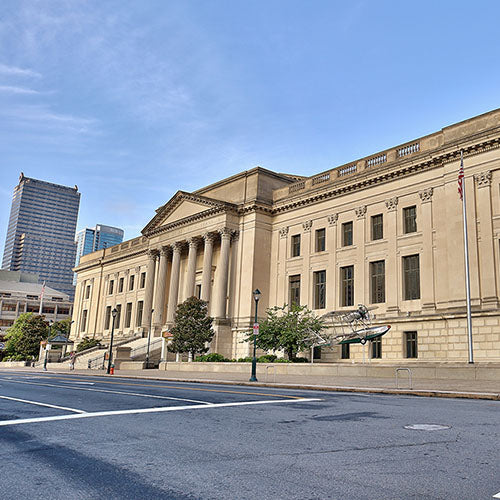
- Commuting by foot or public transit?
- Take any of these buses: 32, 33, 38, or 49. You can also take the Market-Frankford Line (L) and get off around 15th St/City Hall or 13th St.
- If you’re walking from there, enter through the ground-level entrance to the right of the main steps on 20th Street (between 20th and 21st Streets). Look for a sandwich board on the sidewalk with an arrow indicating which door to enter. Once inside, follow the additional signs with arrows, and a guard will be available to direct you to the Levitt Gershman Conference Center.
- Near Sofitel/Rittenhouse or Museums/Franklin Institute
- Sampan — Modern Asian small plates featuring bold flavors, creative cocktails, and shareable bites.
- Pizzeria Vetri — Wood-fired pizzas made with fresh, seasonal ingredients and a variety of flavorful toppings.
- Barbuzzo — Mediterranean-inspired dishes including handmade pastas, pizzas, and seasonal small plates.
- Harp & Crown — Elevated American fare, craft cocktails, and a lively atmosphere with bowling downstairs.
- Ambrosia — Classic Italian cuisine featuring house-made pastas, fresh seafood, and traditional favorites.
- Vetri Cucina — Refined Italian tasting menus showcasing seasonal ingredients and inventive, chef-driven dishes.
- Trattoria Carina — Cozy neighborhood Italian serving handmade pasta, wood-fired pizzas, and comforting classics.
- Giuseppe & Sons — Italian-American favorites including handmade pastas, pizzas, seafood, and hearty entrees.
- Cheesesteaks
- Angelo’s — Beloved Philadelphia spot known for its crusty, flavorful cheesesteaks and excellent wood-fired pizza.
- Dalessandro’s Steaks — A classic Philly cheesesteak destination serving generously stuffed, finely chopped steak sandwiches.
Share your convening experience with the network!
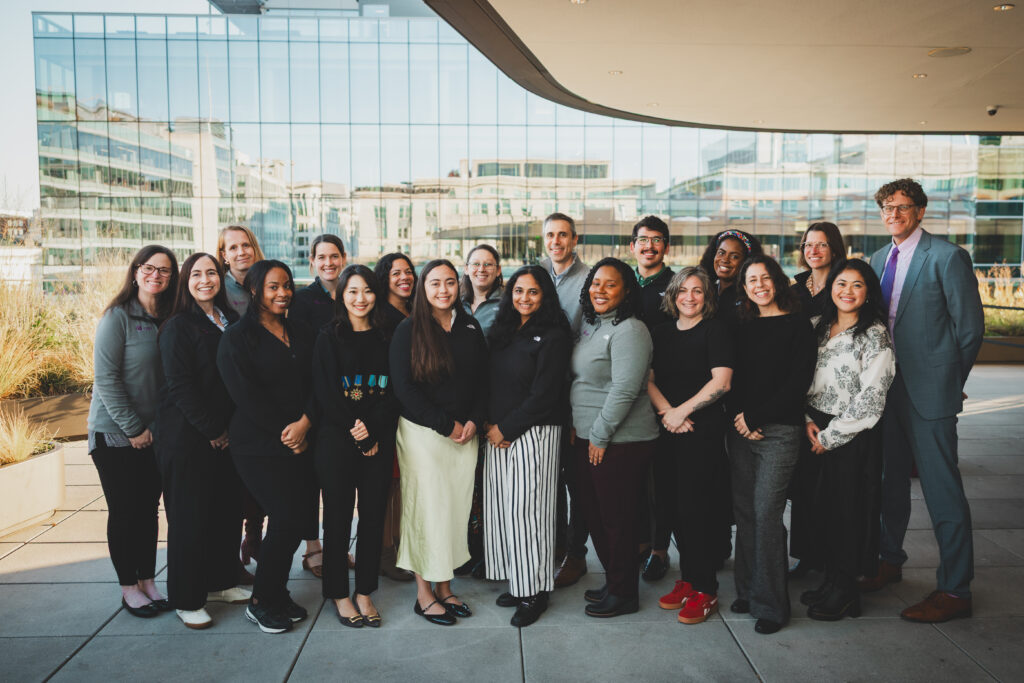
Join us for a Networking Reception from 5:00 PM-6:30 PM on the Assembly rooftop lounge at the Logan Hotel.
(A five-minute walk from the Franklin Institute)

Getting Around the Venue
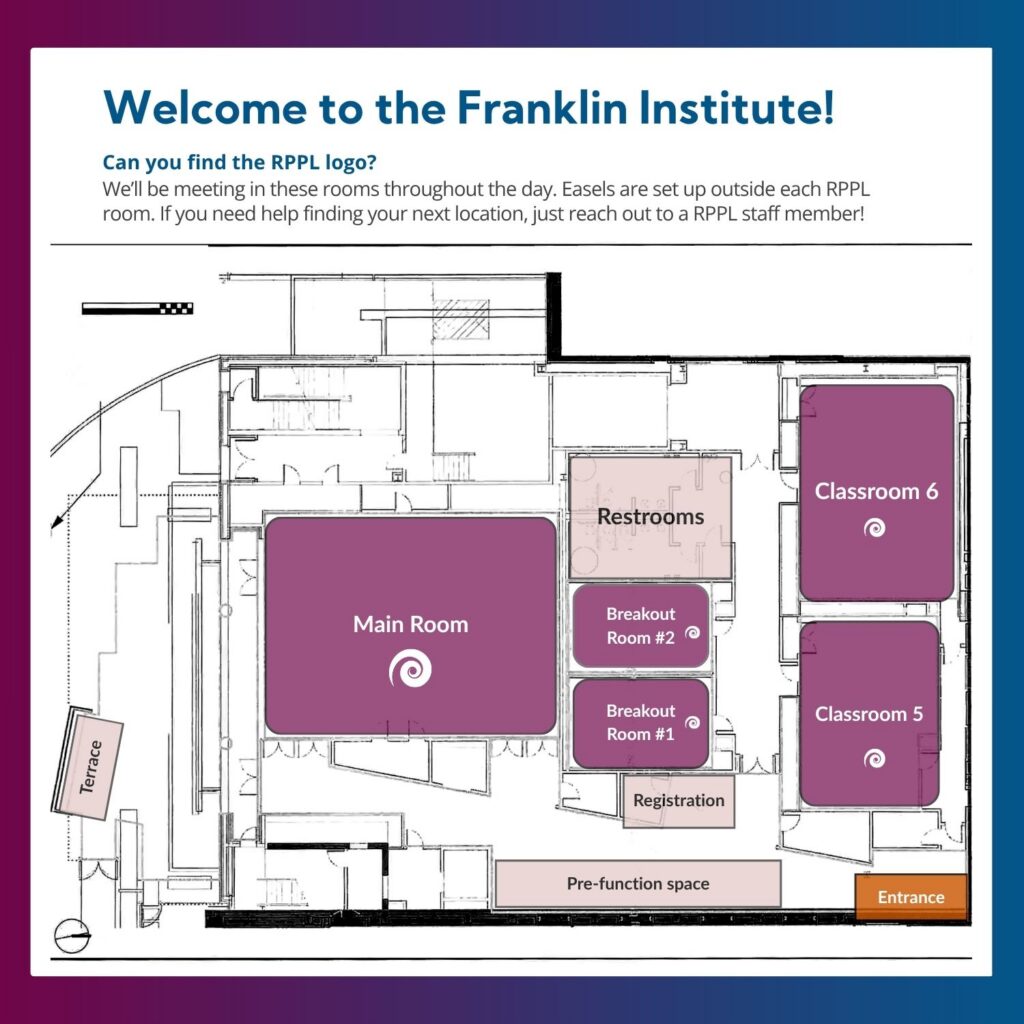
The Franklin Institute offers free public WiFi named FiGuest


